Sunday, August 16, 2009

the design concept as it is

the tower of BABEL

The theme behind the project is to explore the idea of the Parallax View (Zizek), where the perception and understanding of an object changes as the position of the observation varies. The design consists of three sets (maybe more if I can handle) of different but not unrelated ideas that run parallel to each other.

An important note is that all religious/cultural/symbolic readings involved in the process are superficial, as I have no insight knowledge in most of the topics I’m going to include, but it’s exactly the point of my thesis, that superficiality does not matter.


1. examples of economic systems -  resource and power allocation, etc. Different ways to look at the library as a place of a market system. (incidentally through these these examples listed above, their authors gained a huge amount of wealth, possibly surprising themselves)

1.1 Pokemon: access to the power of demons through personal compact mobile devices acting as extended personalities of the underage owners

File:English Pokémon logo.svg

http://www.youtube.com/watch?v=Rumg3twVhOA

1.2 The story of a series of murders that takes place in a medieval Italian monastery, where a library plays an important role – in that the top intellectuals in the abbey were led to their own deaths by the attraction of a book, hence the gate towards knowledge has become closely related to the gate towards death.
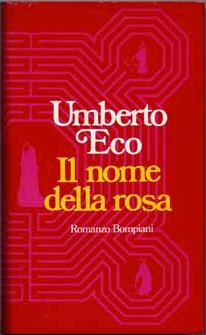
File:The Name of the Rose.jpg

1.3 the story of Harry Potter, or how one boy’s continuous strife to survive from demonic attacks with no particular direction or strategy in mind ended up finding ways to kill Voldemort, the ultimate demon (a good illustration of research through design) ….or how the collapse of an absolute power is predetermined by the formation of it.

1.4 “The Three Versions of Judas” , a fiction written by Argentine writer and poet Jorge Luis Borges,  in which Judas was given benefit of doubt by a pragmatic (Pragmatic?) interpretation of the Bible stories.

http://www.southerncrossreview.org/49/borges-judas-eng.htm

  • Judas as the human counterpart of Jesus : In the first version of Kristus och Judas, Nils says that it was Judas who was the reflection of Jesus in the human world, and as Jesus was our saviour sent from heavens, Judas took up the onus of being the human who led Jesus down the path of redemption.
  • Judas as the extreme ascetic : Amid extreme criticism in the story, Nils is forced to rewrite his book. In the second revision of Kristus och Judas, Nils changes his arguments and claims that Judas sacrificed the most. In Borges' own words, "The ascetic, for the greater glory of God, degrades and mortifies the flesh; Judas did the same with the spirit. He renounced honour, good, peace, the Kingdom of Heaven, as others, less heroically, renounced pleasure."
  • Judas as God and the real Savior : In his final book Den hemlige Frälsaren, Nils comes up with the argument that as God in human shape would be "made totally man, but man to the point of iniquity". Committing a sin would also not be beyond Him. Thereby, Nils concludes finally that He chose Judas as his incarnation.

There’s an interesting similarity between this and Taoist philosophy wherein the extreme negative (Yin) becomes the extreme positive (Yang).

1.5 tbc

1.6

1.7
1.8
1.9

2. Dante's Inferno - the path that leads through hell. This journey would be appropriate for the theme of the library, as Dante put himself at the very beginning of the poem in a state of disorientation – spiritual, physical, psychological, moral, political….its exact nature impossible to determine, but the journey through hell became a process of learning, or is learning a way to hell?

1st, Limbo

the unbaptized and the virtuous pagans - Homer, Socrates, Aristotles, Julius Caesar, Saladin

2nd, those who overcome by lust

3rd, Gluttons, exess in consumption of food

4th, those whose attitude towards material goods deviated from the desired mean.

File:Gustave Doré - Dante Alighieri - Inferno - Plate 22 (Canto VII - Hoarders and Wasters).jpg

In Gustave Doré's illustrations for the fourth circle, the weights are huge money bags

5th, the river of Styx, the wrathful fight each other on the surface, and the sullen or slothful lie gurgling beneath the water. Entering the city of Dis.

6th, Heretics are trapped in flaming tombs.

7th, which houses the violent.

Outer ring, housing the violent against people and property, who are immersed in Phlegethon, a river of boiling blood
Middle ring: In this ring are the suicides, who are transformed into gnarled thorny bushes and trees. They are torn at by the
Harpies.
Inner ring: The violent against God (
blasphemers), the violent against nature (sodomites), and the violent against order (usurers), all reside in a desert of flaming sand with fiery flakes raining from the sky.

8th, The fraudulent—those guilty of deliberate, knowing evil—are located in a circle named Malebolge ("Evil Pockets"), divided into ten bolgie, or ditches of stone, with bridges spanning the ditches.

9th, which houses the traitors, who are frozen in a lake of ice known as Cocytus. Each group of traitors is encased in ice to a different depth, ranging from only the neck and through to complete immersion. The circle is divided into four concentric zones:

File:Gustave Dore Inferno32.jpg

9th circle, Dante speaks to the traitors in the ice, Inferno, Canto 32.

Round 1, Caina, home to traitors to their kindred
Round 2, Antenora, named after Antenor of Troy, for traitors of political entities
Round 3, Ptolomaea, traitors to their guests
Round4, Judecca, named after Judas Iscariot, for traitors of their lords and benefactors.
Centre of Hell, who commited treachery against God, Lucifer, with Brutus, Cassius and Judas Iscariot forever skinned in the mouths of Lucifer.

3. A collection of Studies. An office room is a physical space with a name tag; a Study is something different. It is a palimpsest with layers of meanings and codes written on it, which identifies an ownership (to a person, a culture, an ideology etc.)

The Study of St. Jerome's

The Study of types (faiz's)

The Study of cities (max's)

The Study of ……(yet to be collected)

Sunday, August 9, 2009

Parallax

In a philosophic/geometric sense: An apparent change in the direction of an object, caused by a change in observational position that provides a new line of sight. The apparent displacement, or difference of position, of an object, as seen from two different stations, or points of view. In contemporary writing parallax can also be the same story, or a similar story from approximately the same time line, from one book told from a different perspective in another book. The word and concept feature prominently in James Joyce's 1922 novel, Ulysses. Orson Scott Card also used the term when referring to Ender's Shadow as compared to Ender's Game.

The metaphor is invoked in the magnum opus of Slovenian philosopher Slavoj Žižek in his work The Parallax View. Žižek borrowed the concept of "parallax view" from the Japanese philosopher and literary critic Kojin Karatani. "The philosophical twist to be added (to parallax), of course, is that the observed distance is not simply subjective, since the same object which exists 'out there' is seen from two different stances, or points of view. It is rather that, as Hegel would have put it, subject and object are inherently mediated so that an 'epistemological' shift in the subject's point of view always reflects an ontological shift in the object itself. Or—to put it in Lacanese—the subject's gaze is always-already inscribed into the perceived object itself, in the guise of its 'blind spot,' that which is 'in the object more than object itself', the point from which the object itself returns the gaze. Sure the picture is in my eye, but I am also in the picture."[20]

The word is used in the title of Alan J. Pakula's 1974 movie The Parallax View, in which a reporter (Warren Beatty) investigates an assassination. The word in this case refers to a fictional corporation portrayed in the film.

The word is used in the song "Roll the Bones" from the album of the same name by the Canadian progressive rock trio Rush. In these lyrics, parallax is used to point out how differing points of view do not change the nature of certain facts or truths.[citation needed]

manifesto

architecture exists in the collective mind only as an accumulation of moments and situations. It extends its meaning beyond the limit of materiality and form by inevitably becoming a ritual.

when such rituals are practised repetitiously, certain meanings are carried forward to the future and upon a wider audience, hence become visible. This is the only meaningful way, I consider, for architecture to offer commentary to the society, the brief, or the client.

it should be noted that such commentaries are inevitably autobiographical on the one hand, projection of the framented ego (individual/collective; the lack of perfect coordination between theory and reality) onto a physical, consistent form (the built object); and on the other hand, completely alienated from the original context as it becomes spreaded through simplification as symbols.

my vision of architecture is therefore a series of parts loosely bound together by a symbolic order, not so much as a statement (technical, social, formal.....) but more as dialectics, conversations that are artificially put on stage (ritualized?) and which are incapable of finding an end.

Monday, August 3, 2009

contemplations of basic concepts

architecture

it is difficult to dissociate architecture from the concept of order (n.), which among others, indicates "body of persons living under a religious discipline," "row, rank, series, arrangement," originally "a row of threads in a loom," from Italic root *ored(h)- "to arrange, arrangement" The word reflects a very medieval notion: "a system of parts subject to certain uniform, established ranks or proportions."
From the traditional and more explicit order of Greek columns, a vocabulary, to the order of Pyramids and tombs of ancient kings and novelties, in terms of size and decorations, to an implicit "order" when we analyze important works in modern and post-modern architecture (What makes Venturi's mum's house so important that it became architecture), etc. etc., all implicates that for a building to become architecture it has to be included into a set of social/cultural/historical rules and measured accordingly. A iron shed petrol station can become architecture if it becomes the stereotype of many to come (hence ranked as the origin, like Mies' work to office buildings); a little Japanese farm house roofed by hay can be considered architecture if the author was Kengo Kuma and it would attract contemplations on his attitude towards nature as manifested through this humble work (hence to be located in the vast ocean of design philosophies); On the other hand, another skyscraper in Dubai or beyond the la defence of Paris may offer nothing but pragmatic interests to associated parties and should by all means be considered a building only, if, however, the same featureless skyscraper managed to be built somewhere in the medieval town centre of Brugge, it may be elevated to a state of interest again in terms of its implications in the greater urban setting.
Architecture hence exists hand in hand with the state of the collective mind. It must first be detached intellectually from the functions of the building for the imposition of artificial orders to become possible, and also be significant enough to be stored in the limited memories of the cultural and aesthetic library of the society.
economic crisis
In the context of this thesis economic crisis does not just refer to the world of finance, but more generally any situation that faces the task of resources allocation.
economic crisis inevitably has two phases, the phase of abundance at first, followed by the phase of collapse. The phase of abundance is often characterized by a rapid accumulation of resources (wealth, knowledge, power....) , and it has the abilit to self-reinforce and grow, accelerating until the point where the system cannot sustain itself, at which point the phase of collapse starts.
It is in my view impossible for an external force to prevent an economic crisis. Government actions in a financial crisis can typically postpone or replace (by way of colonization, war, etc...) a crisis, but few evidence supports that governments can prevent or cure it.
 
bushfire
an example of an economic crisis where a natural process is catalyzed by external factors beyond the control of those who are affected.
 
climate change
Climate always changes. The volcano eruption of Mount Pinatubo in 1991 decreased global temperature by 0.5 degree. There's nothing more normal than this natural process of self revitalization of the planet. It only came into the collective consciousness as an urgent issue when this phenomenon is considered in conjunction with some other issues: energy crisis, industrial pollution, consumerism, waste production, etc.

consumption
The main driver of economic activities and hence also the fundamental source of financial crisis. Consumption is excessive and can only keep expanding. It is impossible to correct this far from equilibrium social condition unless through drastic natural or human actions such as tsunami or war that are able to wipe out the existing social order (mode of resource allocation). From a historical viewpoint wars were devices by which to deliberately collapse a system when it reaches abundance. Unfortunately/fortunately?, the possibility of a modern full scale war has been prevented by the invention of atomic weapons.  Therefore no threat can possibly stop the existing expansion of human actions until it collapsed on its own.


quantity

technology

Technology has two primary tasks. One is to make what's impossible possible, like sending people into the space; the other is to make a process more efficient. 


critical design

research

library

library is an artificial environment where resources are stored beyond the amount that factors of production would have required in a perfectly free market condition. It is hence not an institute to maximize allocative efficiency but productive efficiency that would be resulted from the intensified allocation.

St. Jerome

contemporary learning

fever

overpopulation

For a sustainable growth to become possible, all factors of production must be available, leaving room for expansion. Hence the moment when earth reached "full-population" is when the first resource became extinguished.