the tower of BABEL
The theme behind the project is to explore the idea of the Parallax View (Zizek), where the perception and understanding of an object changes as the position of the observation varies. The design consists of three sets (maybe more if I can handle) of different but not unrelated ideas that run parallel to each other.
An important note is that all religious/cultural/symbolic readings involved in the process are superficial, as I have no insight knowledge in most of the topics I’m going to include, but it’s exactly the point of my thesis, that superficiality does not matter.
1. examples of economic systems - resource and power allocation, etc. Different ways to look at the library as a place of a market system. (incidentally through these these examples listed above, their authors gained a huge amount of wealth, possibly surprising themselves)
1.1 Pokemon: access to the power of demons through personal compact mobile devices acting as extended personalities of the underage owners

http://www.youtube.com/watch?v=Rumg3twVhOA
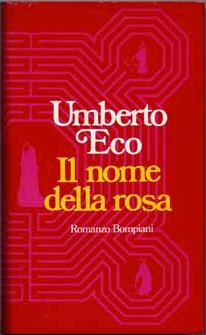
1.2 The story of a series of murders that takes place in a medieval Italian monastery, where a library plays an important role – in that the top intellectuals in the abbey were led to their own deaths by the attraction of a book, hence the gate towards knowledge has become closely related to the gate towards death.
1.3 the story of Harry Potter, or how one boy’s continuous strife to survive from demonic attacks with no particular direction or strategy in mind ended up finding ways to kill Voldemort, the ultimate demon (a good illustration of research through design) ….or how the collapse of an absolute power is predetermined by the formation of it.
1.4 “The Three Versions of Judas” , a fiction written by Argentine writer and poet Jorge Luis Borges, in which Judas was given benefit of doubt by a pragmatic (Pragmatic?) interpretation of the Bible stories.
http://www.southerncrossreview.org/49/borges-judas-eng.htm
- Judas as the human counterpart of Jesus : In the first version of Kristus och Judas, Nils says that it was Judas who was the reflection of Jesus in the human world, and as Jesus was our saviour sent from heavens, Judas took up the onus of being the human who led Jesus down the path of redemption.
- Judas as the extreme ascetic : Amid extreme criticism in the story, Nils is forced to rewrite his book. In the second revision of Kristus och Judas, Nils changes his arguments and claims that Judas sacrificed the most. In Borges' own words, "The ascetic, for the greater glory of God, degrades and mortifies the flesh; Judas did the same with the spirit. He renounced honour, good, peace, the Kingdom of Heaven, as others, less heroically, renounced pleasure."
- Judas as God and the real Savior : In his final book Den hemlige Frälsaren, Nils comes up with the argument that as God in human shape would be "made totally man, but man to the point of iniquity". Committing a sin would also not be beyond Him. Thereby, Nils concludes finally that He chose Judas as his incarnation.
There’s an interesting similarity between this and Taoist philosophy wherein the extreme negative (Yin) becomes the extreme positive (Yang).
1.5 tbc
1.6
1.7
1.8
1.9
2. Dante's Inferno - the path that leads through hell. This journey would be appropriate for the theme of the library, as Dante put himself at the very beginning of the poem in a state of disorientation – spiritual, physical, psychological, moral, political….its exact nature impossible to determine, but the journey through hell became a process of learning, or is learning a way to hell?
1st, Limbo
the unbaptized and the virtuous pagans - Homer, Socrates, Aristotles, Julius Caesar, Saladin
2nd, those who overcome by lust
3rd, Gluttons, exess in consumption of food
4th, those whose attitude towards material goods deviated from the desired mean.

In Gustave Doré's illustrations for the fourth circle, the weights are huge money bags
5th, the river of Styx, the wrathful fight each other on the surface, and the sullen or slothful lie gurgling beneath the water. Entering the city of Dis.
6th, Heretics are trapped in flaming tombs.
7th, which houses the violent.
Outer ring, housing the violent against people and property, who are immersed in Phlegethon, a river of boiling blood
Middle ring: In this ring are the suicides, who are transformed into gnarled thorny bushes and trees. They are torn at by the Harpies.
Inner ring: The violent against God (blasphemers), the violent against nature (sodomites), and the violent against order (usurers), all reside in a desert of flaming sand with fiery flakes raining from the sky.
8th, The fraudulent—those guilty of deliberate, knowing evil—are located in a circle named Malebolge ("Evil Pockets"), divided into ten bolgie, or ditches of stone, with bridges spanning the ditches.
9th, which houses the traitors, who are frozen in a lake of ice known as Cocytus. Each group of traitors is encased in ice to a different depth, ranging from only the neck and through to complete immersion. The circle is divided into four concentric zones:

9th circle, Dante speaks to the traitors in the ice, Inferno, Canto 32.
Round 1, Caina, home to traitors to their kindred
Round 2, Antenora, named after Antenor of Troy, for traitors of political entities
Round 3, Ptolomaea, traitors to their guests
Round4, Judecca, named after Judas Iscariot, for traitors of their lords and benefactors.
Centre of Hell, who commited treachery against God, Lucifer, with Brutus, Cassius and Judas Iscariot forever skinned in the mouths of Lucifer.
3. A collection of Studies. An office room is a physical space with a name tag; a Study is something different. It is a palimpsest with layers of meanings and codes written on it, which identifies an ownership (to a person, a culture, an ideology etc.)
The Study of St. Jerome's
The Study of types (faiz's)
The Study of cities (max's)
The Study of ……(yet to be collected)

No comments:
Post a Comment